What if the home you buy in the Chartrons today could become the family legacy your grandchildren inherit? This isn’t just about square meters or views-it’s about choosing a piece of Bordeaux’s soul. Once the bustling hub of wine merchants, this district now draws discerning buyers who value history, craftsmanship, and long-term value. But with shifting demographics and tightening inventory, how do you secure a property that won’t just appreciate-but endure?
The evolution of the Chartrons property market landscape
The Chartrons has always been more than a neighborhood-it’s a narrative in stone and timber. Former wine warehouses, once filled with casks bound for global ports, now house loft apartments where exposed beams and thick limestone walls tell stories of centuries past. These architectural details aren’t just aesthetic; they’revalue anchors. Properties that retain or thoughtfully restore original features consistently outperform in resale and rental appeal. Preservation isn’t nostalgia-it’s a sound investment strategy.
Buyer profiles have shifted dramatically. While local families once dominated, today’s market sees growing interest from international investors, Parisian executives, and expatriates seeking a refined Bordeaux lifestyle. Demand centers on spacious, light-filled apartments-particularly those with high ceilings, dual exposures, and flexible layouts suited to both entertaining and family life. Renovated lofts with modern comforts tucked within historic shells are especially sought after.
For those seeking an exceptional residence, acquiring luxury real estate in Chartrons Bordeaux remains a safe haven for preserving family wealth. Yet availability is shrinking. True gems-especially those with private outdoor space or river proximity-rarely hit public listings. Off-market transactions are on the rise, driven by discretion and speed. In this climate, access to curated networks often makes the difference between missing out and securing a legacy property.
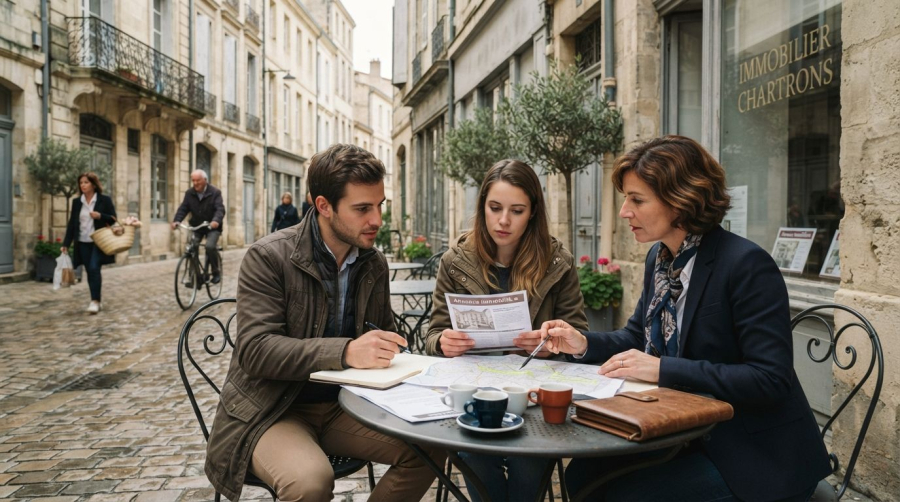
Preserving architectural heritage
The district’s 18th- and 19th-century buildings are protected in part by local urban planning rules, which means renovations must respect original facades and structural elements. While this can add complexity, it also ensures neighborhood coherence and long-term desirability. Buyers who invest in compliant, high-quality restorations often see stronger capital appreciation.
Shift in buyer demographics
The new Chartrons buyer is often well-traveled, digitally connected, and selective. They’re not just buying space-they’re buying a lifestyle anchored in culture, walkability, and elegance. This shift has elevated demand for turnkey properties with minimal compromise on modern comfort.
Current scarcity of high-end listings
With limited new construction possible in this historic zone, supply depends on resale. As a result, competition is fierce for properties offering both authenticity and move-in readiness. This scarcity has reinforced the importance of early access and expert guidance when navigating the market.
Essential features sought by prestigious buyers
Today’s luxury buyers in the Chartrons aren’t swayed by opulence alone-they look for thoughtful design that blends heritage with contemporary living. The most desirable properties share a set of key attributes that go beyond aesthetics to influence long-term satisfaction and value retention.
Top-tier amenities and layouts
While charm is inherent in the district’s architecture, modern expectations shape final decisions. Buyers prioritize features that enhance daily life and security, especially in a city-center context. The following elements consistently elevate a property’s appeal:
- Secure underground parking - increasingly rare and highly valued in a pedestrian-friendly zone
- Rooftop terraces or private gardens - outdoor space with views of the Garonne or city skyline
- Private elevators - essential for multi-level lofts or upper-floor apartments
- Original fireplaces and high ceilings - tangible links to the building’s history
- Modern energy efficiency - discreet upgrades like double glazing and insulation, hidden behind period detailing
Proximity to the riverfront and the boutiques and cafes of Rue Notre-Dame also plays a decisive role. The best homes feel secluded yet are steps from Bordeaux’s cultural pulse. Renovations that preserve 18th-century features while integrating smart home systems or wellness areas-like spa bathrooms-strike the ideal balance.
Market trends and pricing analysis in 2026
Pricing in the Chartrons is anything but uniform. It shifts significantly based on location within the district, building type, and condition. While broad averages are often cited, they can be misleading without context. A more nuanced view reveals clear tiers of value.
Average square meter benchmarks
Current observations suggest a wide but structured range. In the core area near the Jardin Public, well-maintained apartments command between 5,500 and 6,500 €/m². Exceptional lofts in converted warehouses or buildings with private access and terraces can exceed 7,000 €/m². Townhouses or properties with gardens are rarer still and often trade above 7,500 €/m², with pricing influenced more by uniqueness than pure metrics.
In contrast, standard apartments in need of renovation may start around 4,200 €/m², but final value after restoration typically aligns with the premium segments.
Renovation costs and impact
The condition of a property dramatically affects both initial cost and long-term return. A “ready-to-move-in” luxury home often sells at a premium of 15% to 25% compared to a similar layout requiring work. Buyers are willing to pay for certainty-especially when heritage regulations add complexity to renovations. Hidden costs like structural reinforcement or compliance upgrades can surprise the unprepared, making professional assessment essential before purchase.
Investment performance across different zones
While the Chartrons is often treated as a single entity, performance varies meaningfully by subzone. Understanding these nuances helps investors align their goals-whether capital stability or growth-with the right location.
Core Chartrons vs. Northern extensions
The southern and central parts, close to the Jardin Public and Place du Parlement, offer the highest stability. Prices here are elevated but resilient, favored by families and long-term owners. The northern edge, near the Bassins à Flot, is seeing renewed interest. Once more industrial, this area now attracts younger, dynamic buyers drawn to its creative energy and larger spaces. Growth potential is higher, though liquidity may be lower for unconventional layouts.
Rental yields for premium properties
Luxury rentals in the Chartrons remain stable, particularly for fully furnished, high-spec apartments targeting expatriate professionals or diplomatic tenants. Yields typically range between 3% and 4.5%, not the highest in absolute terms, but supported by low vacancy and strong tenant quality. The lifestyle appeal ensures consistent demand, even in fluctuating markets.
| Zone | Property Type | Average Price Range (€/m²) | Investment Profile |
|---|---|---|---|
| Core Chartrons | Luxury apartment, townhouse | 5,800 - 7,500+ | Stability-focused, low volatility |
| Riverfront | Renovated loft, premium duplex | 6,200 - 8,000 | Prestige-driven, high desirability |
| North Chartrons | Converted warehouse, contemporary loft | 4,800 - 6,500 | Growth-oriented, emerging appeal |
Strategic advice for selling your Chartrons property
Selling in the Chartrons demands more than a “for sale” sign. In a market where perception shapes value, positioning is everything. Overpricing-even slightly-can lead to a property being overlooked, then dismissed as “stale.” Once that happens, regaining momentum is difficult.
Valuation accuracy in a tense market
Accurate pricing starts with data, not aspiration. Relying on actual notarized sales (from the DVF database) rather than asking prices ensures realism. A professional valuation that accounts for layout, light, floor level, and renovation quality helps avoid the trap of emotional pricing. Properties that launch at the right level attract serious offers quickly-often within days.
Marketing to a global audience
The pool of potential buyers extends far beyond Bordeaux. To reach them, marketing must match the property’s caliber. High-end photography, cinematic video tours, and placement on international luxury platforms are non-negotiable. Discretion matters, but so does visibility among qualified buyers. The most effective campaigns combine elegance with precision, telling a story that resonates across cultures.
Essential questions
What common mistake should I avoid when buying a historic loft?
Underestimating the regulatory constraints of heritage protection during renovations. Many buyers overlook the need for approval on structural changes, window replacements, or facade work, which can delay projects and increase costs unexpectedly. Always consult a specialist before finalizing a purchase.
Are there specific legal guarantees required for properties in former warehouses?
Yes-especially regarding change-of-use permits and structural insurance. Converting commercial or industrial spaces to residential use requires documented authorization. Buyers should verify these titles and ensure the property has appropriate insurance covering load-bearing elements and unique construction features.
When is the best time of year to list a high-end property in the Chartrons?
Spring is traditionally the strongest season. Natural light floods interiors, and outdoor spaces like terraces and gardens are at their most appealing. This timing aligns with the start of the international relocation cycle, maximizing exposure to global buyers.
